CONTENTS
The Prehistoric Period
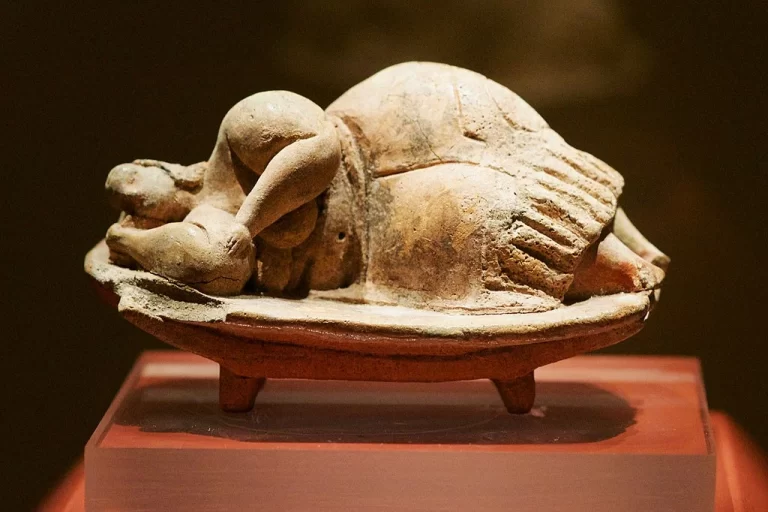
Earth began 4.5 billion years ago, but human evolution represents only a small fraction of that timeline. The Prehistoric Period (before written records) spans roughly from 2.5 million years ago (when early stone tools appeared) to about 1,200 B.C., depending on the region. It is typically divided into three main archaeological periods: the Stone Age, the Bronze Age, and the Iron Age. This era saw significant transformations, from tool-making and hunting to agriculture, art, and religion.
The Stone Age
The Stone Age is subdivided into the Paleolithic (Old Stone Age), Mesolithic (Middle Stone Age), and Neolithic (New Stone Age) periods. This era is defined by the development and use of tools and the gradual shift from hunting and gathering to farming.
- Paleolithic Period (2.5 million years ago to 10,000 B.C.): Early humans lived in caves, huts, or tepees and were primarily hunters and gatherers. They used basic stone and bone tools, crude stone axes, and controlled fire for cooking animals like woolly mammoths, deer, and bison. They also fished and collected fruits, nuts, and berries. Paleolithic humans created the first known art, using natural materials like ochres and charcoal to create cave paintings and carvings of figurines from stone, clay, bones, and antlers. The end of the Paleolithic period coincided with the last Ice Age’s conclusion, leading to the extinction of many large mammals and prompting human migration.
- Mesolithic Period (10,000 B.C. to 8,000 B.C.): Humans developed smaller, polished stone tools, often attached to antlers, bones, or wood to create spears and arrows. They lived nomadically near water bodies and began introducing agriculture, which led to more permanent village settlements.
- Neolithic Period (8,000 B.C. to 3,000 B.C.): This period marked a shift to agriculture and food production. Humans domesticated animals, cultivated grains, and used polished tools like hand axes and adzes for farming. They built permanent homes, developed pottery, sewing, and weaving, and settled in plains, signifying the dawn of more complex societies.
The Bronze Age (3,000 B.C. to 1,300 B.C.)
The discovery of bronze, an alloy of copper and tin, revolutionized tool and weapon-making, replacing stone tools. This period saw innovations like the ox-drawn plow and the wheel, advancing agriculture and transportation. Architecture and art flourished, with the invention of the potter’s wheel and textiles becoming prominent. Clothing mainly consisted of woolen garments such as skirts, kilts, tunics, and cloaks. People lived in roundhouses made of stone walls with thatched roofs and hearths.
Societies became more organized, with the development of governments, laws, and religions. The ancient Egyptians built pyramids, and the first written records, like Egyptian hieroglyphs and petroglyphs, emerged during this time.
The Iron Age (1,300 B.C. to 900 B.C.)
Ironworking began in this period, with iron initially considered more valuable than gold. Wrought iron tools and weapons were easier to produce than bronze, leading to widespread use. Architectural advancements included the construction of four-room homes, hill forts, royal palaces, and temples. Early city planning introduced organized streets and water systems.
Agriculture, art, and religion grew more sophisticated, and writing systems began to develop, marking the transition into the Early Historical Period.
Fashion and Symbolism in Prehistoric Times
While modern fashion is often associated with runways and designers, prehistoric societies also placed importance on appearance. The Gravettian culture (about 33,000 – 22,000 B.C.), which spread across Europe, provides rich insights into this early symbolic expression.
Figures from the Paleolithic period, such as the Venus of Willendorf, (~25,000 B.C.), depict full-figured women symbolizing fertility. The Venus’s head covering has sparked debates — is it hair, a hat, or a woven headdress? If interpreted as a headdress, it might suggest the use of early textile techniques (though not true knitting).

Other figures from this cultural context, like the Venus of Brassempouy (~23,000 B.C.) in France, also show detailed head coverings or hairstyles, hinting at early symbolic grooming and ornamentation. The Young Prince of Arene Candide in Italy, a 15–16-year-old boy from the Gravettian period, was buried with shell and ivory ornaments sewn onto leather clothing. These discoveries together illustrate that even nomadic hunter-gatherers placed significant value on style, adornment, and symbolic display.

Clothing in Warmer Climates
Though direct evidence is scarce, it’s likely that prehistoric people in warmer climates also used clothing and adornments for status and expression, much like modern tribal societies. Bradshaw (Gwion Gwion) rock paintings in Australia, dating from about 12,000 to 17,000 years ago, depict figures adorned with elaborate headdresses, sashes, and possible feather decorations. Comparing these to contemporary tribes such as the Dogon of West Africa suggests that symbolic clothing and ornamentation might have played similar social or ritual roles in ancient times — though these analogies should be understood as interpretive, not direct cultural connections.
The Bog People and Clothing Preservation
Bog bodies, preserved in peat bogs, offer extraordinary insights into clothing and grooming in prehistoric and early historic Europe. While the oldest known bog bodies date back as far as 8000 B.C., most of the well-preserved examples that provide detailed information about clothing and textiles date to the Iron Age (roughly 500 B.C. to 200 A.D.) and often show signs of violent deaths, possibly connected to ritual sacrifices or executions.
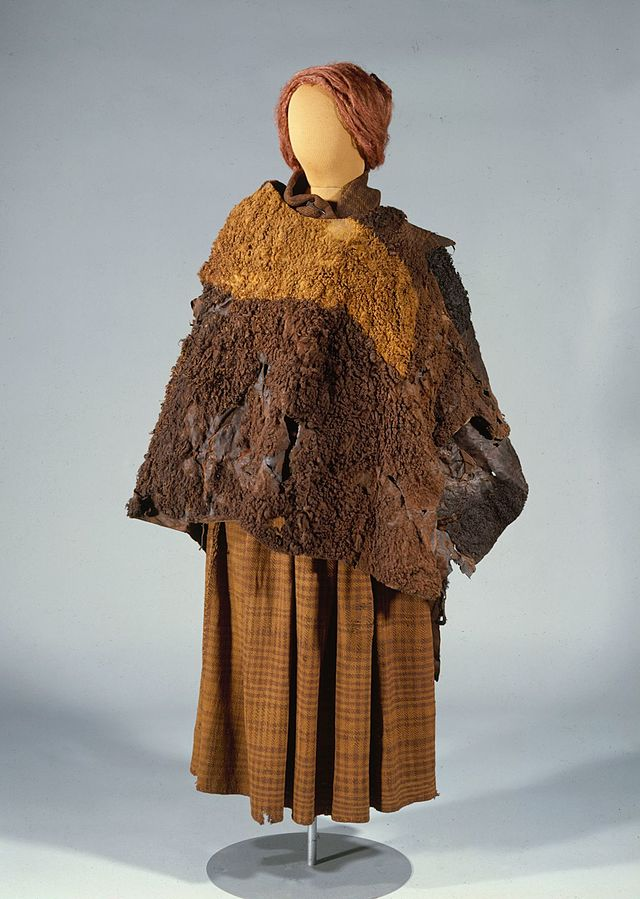
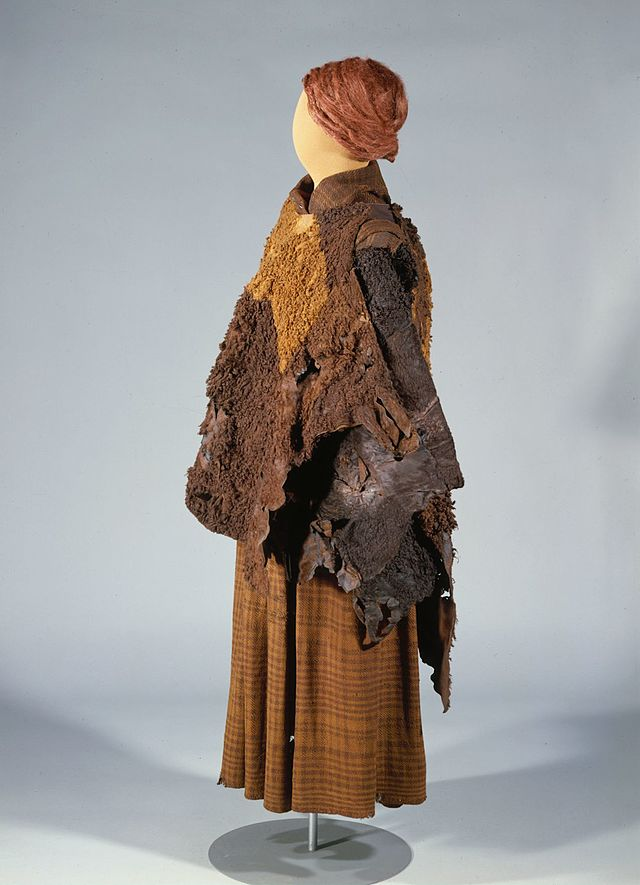
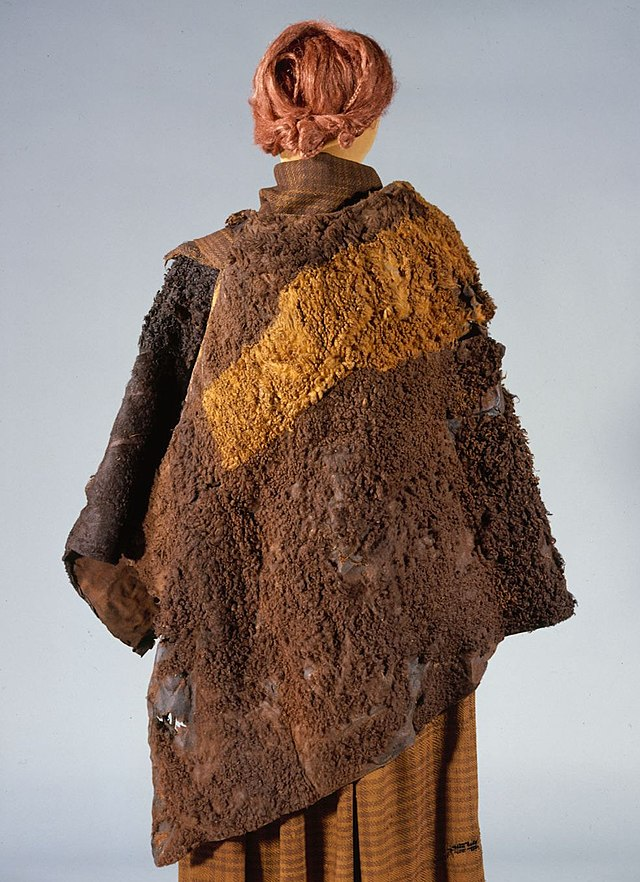
One of the best-preserved examples is the Huldremose Woman, discovered in Denmark in 1879. She wore a checked woolen skirt, a red-dyed woolen scarf, and two cloaks — one woven from wool and another skin cape estimated to have been made from up to 14 sheep. Her garments were colorful and skillfully crafted, highlighting the textile expertise of Iron Age societies. Forensic evidence indicates that she was strangled with a woolen cord and that her body was carefully dressed before being placed in the bog.
Otzi the Iceman (3,300 B.C.)
Discovered in the Ötztal Alps in 1991, Ötzi offers a remarkably detailed look at prehistoric clothing and daily life. He wore a leather belt, leggings, a loincloth, and a tailored coat made from multiple hides. His woven grass cape provided insulation and some waterproofing, while his leather and twine shoes were stuffed with grass for warmth. Ötzi’s carefully constructed attire demonstrates sophisticated craftsmanship and suggests the existence of specialized skills and exchange networks, though not a “fashion industry” in the modern sense.
Ötzi also bore over 60 tattoos, many of which align with known acupuncture points, hinting at early therapeutic practices. His violent death — shot in the back with an arrow — makes him one of the oldest known murder cases in human history.
Clothing, Accessories, and Hairstyles in Prehistoric Societies
Prehistoric statues and artifacts suggest a surprising variety of clothing styles and grooming habits. Some figurines, particularly from Neolithic and early Bronze Age cultures in Europe and the Near East, depict figures wearing skirts or dresses, sometimes decorated, often leaving the upper body bare or minimally covered. These images hint at more complex garment construction than usually assumed.
Burial finds include shell artifacts with perforations, likely used as ornaments or sewn onto garments, suggesting that individuals were adorned and perhaps buried in decorated clothing. While few actual textiles survive, abundant finds of spindle whorls, loom weights, and sewing needles show that people spun yarn (probably wool or plant fibers) and crafted clothing.
Stone and clay figurines also reveal elaborate hairstyles, including chin-length bobs, plaits, and curls. The famous Sleeping Lady figurine from Malta (~3000 B.C.) appears to show an intricate headdress or hair arrangement, sometimes speculatively interpreted as partial head shaving.
The bog bodies of Iron Age Europe provide especially vivid evidence. Clonycavan Man from Ireland wore a carefully styled “pompadour” using imported pine resin as hair gel, while others like Grauballe Man had well-manicured nails — both suggesting strong attention to personal appearance.
These finds together show that prehistoric clothing and adornment were not merely functional but expressed status, identity, and artistic sensibility, much like fashion does today.
Leave a Reply